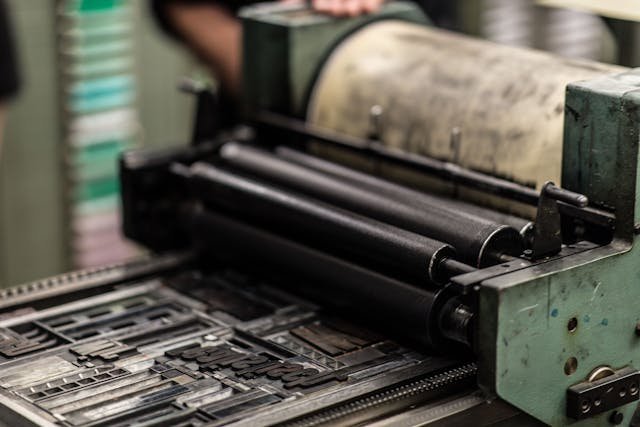
Residue buildup, production downtime, and the need to protect sensitive printing equipment continue to present ongoing challenges for manufacturers seeking eco friendly printing press cleaning solutions. Traditional cleaning methods—often involving abrasive techniques, water, or harsh chemical solvents—can increase maintenance risks and expose workers to harmful substances. As an alternative, Nu-Ice Blasting™ provides industrial dry ice blasting equipment designed to clean effectively without secondary waste or chemical use. By utilizing solid CO₂ pellets that sublimate on contact, this method supports non-abrasive, dry cleaning across complex surfaces. The approach offers a practical shift away from conventional processes while aligning with safer, more environmentally responsible maintenance practices in modern print operations.
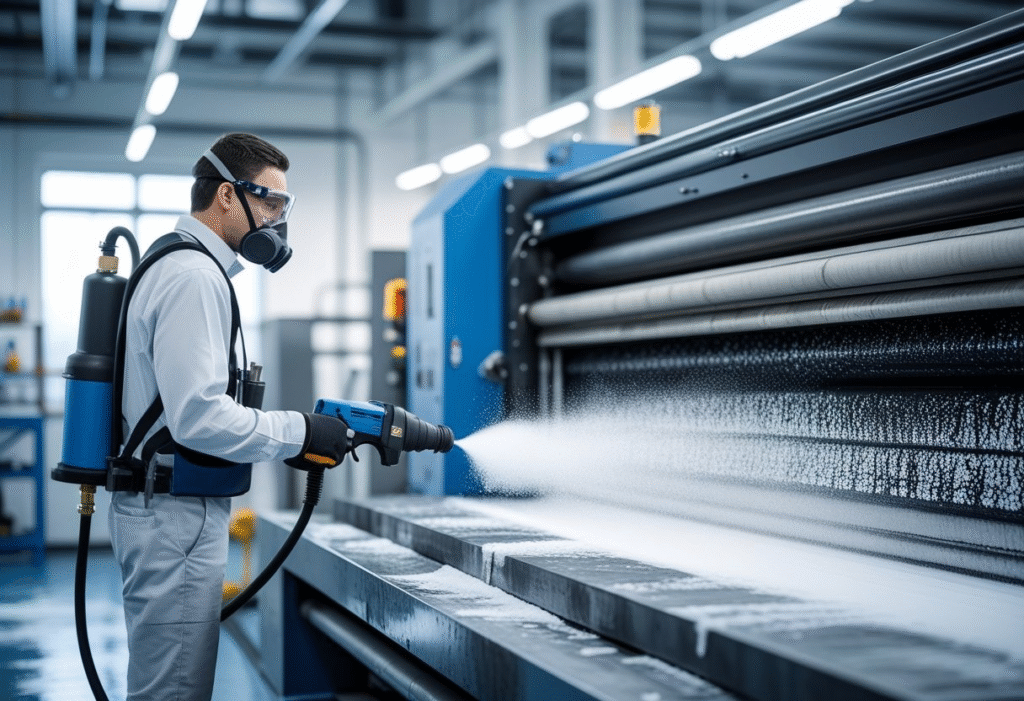
Dry ice blasting is a cleaning method that uses solid carbon dioxide (CO₂) pellets accelerated by compressed air to remove contaminants from industrial surfaces. The process directs these pellets at high speed through a hose and nozzle, allowing them to impact buildup such as inks, residues, or coatings. Upon contact, the dry ice pellets immediately sublimate—transitioning from a solid to a gas—without leaving liquid residue behind. This phase change eliminates secondary waste, as the CO₂ dissipates into the atmosphere. The method is designed to clean effectively while avoiding moisture, chemical solvents, or abrasive media, making it suitable for sensitive equipment and controlled environments.
Kinetic Impact
Dry ice pellets are propelled at high velocity using compressed air. When they strike a surface, the force helps loosen contaminants without significantly affecting the underlying material.
Thermal Shock
The extremely low temperature of dry ice creates a rapid temperature difference upon contact. This causes contaminants to contract and become brittle, weakening their bond to the surface.
Sublimation Expansion
As pellets sublimate instantly from solid to gas, they expand in volume. This expansion occurs beneath the loosened contaminants, helping lift and separate them from the substrate without leaving residue behind.
A dry ice blasting system consists of several key components that work together to deliver consistent cleaning performance. An air compressor supplies the compressed air needed to accelerate dry ice pellets through the system. The dry ice hopper stores the pellets and feeds them into the machine during operation. A metering system regulates the flow rate of pellets, ensuring controlled and efficient usage. The hose transports the air and pellets from the machine to the application point, while the nozzle directs and focuses the stream onto the target surface. Each component plays a role in maintaining steady delivery, allowing operators to adjust cleaning intensity based on the application.
Nu-Ice Blasting™ is a U.S.-based manufacturer of industrial dry ice blasting equipment, producing systems designed for a range of cleaning applications across industries. Established in 2012, the company focuses on engineering and manufacturing equipment domestically, with an emphasis on durability and consistent performance. Its product line includes machines that support non-abrasive, dry cleaning processes using CO₂ pellets, aligning with operational needs where moisture or chemical exposure must be minimized. By enabling toxic ink removal alternatives, Nu-Ice Blasting™ equipment contributes to safer maintenance practices without relying on traditional solvents. The company’s approach centers on providing reliable equipment that integrates with standard compressed air systems, offering a practical solution for facilities seeking controlled, efficient, and environmentally conscious cleaning methods.
Nu-Ice Blasting™ equipment incorporates several functional features designed to support controlled dry ice cleaning operations. The blasting gun serves as the primary interface for directing the stream of dry ice pellets and compressed air toward the target surface. Interchangeable nozzle options allow operators to adjust the shape and focus of the blasting stream, depending on the surface geometry or accessibility requirements. Systems may also include an integrated moisture separator, which helps remove water vapor from the compressed air supply before it enters the machine. An aftercooler can be used alongside the compressor to reduce air temperature and further manage moisture levels. These components work together to maintain consistent airflow conditions and support stable pellet delivery during operation.
Nu-Ice Blasting™ machines are designed with industrial use in mind, with specifications that support portability and consistent operation. Equipment dimensions vary by model but are generally configured to allow maneuverability within facility environments. Unit weight is structured to balance stability with transportability. Hopper capacity is sized to hold a practical volume of dry ice pellets for continuous operation without frequent refilling. Airflow requirements typically align with standard industrial compressor outputs, with defined ranges that support effective pellet acceleration. Operating pressure ranges are adjustable to accommodate different cleaning intensities, while dry ice consumption rates depend on the selected settings and application needs. These specifications reflect equipment designed to integrate with existing compressed air infrastructure while maintaining steady performance.
Preparation and Setup
Operators connect the machine to a compressed air source and ensure dry ice pellets are loaded into the hopper. System checks include verifying air supply conditions and hose connections.
Safety Requirements
Basic safety measures include the use of appropriate personal protective equipment and ensuring adequate ventilation due to the release of CO₂ gas during operation.
Typical Workflow Steps
Once activated, the machine meters dry ice pellets into the airflow, which are then propelled through the hose to the blasting gun. The operator directs the nozzle at the target surface, adjusting pressure and pellet flow as needed. The process continues until the cleaning cycle is complete, after which the system is shut down and remaining materials are cleared.
Nu-Ice Blasting™ equipment is used across a range of industrial and commercial environments where controlled surface cleaning is required. In manufacturing and production settings, the equipment is applied to machinery, molds, and assembly components where residue buildup can occur during operations. In food processing facilities, it is used in areas where dry, non-liquid cleaning methods are necessary to maintain sanitation standards without introducing moisture. The equipment is also suitable for historical restoration and delicate surface cleaning, where non-abrasive interaction is important for preserving underlying materials. Additional applications include automotive and aerospace maintenance, where components may require precise cleaning without disassembly, as well as electrical and specialty environments where moisture-sensitive equipment is present. These varied use cases reflect the adaptability of dry ice blasting systems across industries with different operational requirements.
Dry ice blasting is characterized by a process that does not generate secondary waste, as the dry ice sublimates upon contact and disperses as gas. The method is non-abrasive, allowing surfaces to be cleaned without significant wear or damage to underlying materials. Because it operates without water or chemical solvents, it supports a dry, chemical-free cleaning approach that can be used in controlled environments. Operational considerations include ensuring proper ventilation due to CO₂ release and maintaining suitable compressed air conditions for consistent performance. Within the dry ice safety printing industry, these characteristics align with practices that prioritize reduced chemical handling and controlled cleaning processes.
Nu-Ice Blasting™ systems can be configured with a range of accessories to support different operational requirements. Nozzle and hose options allow for adjustments in reach, flexibility, and stream direction, depending on the application environment. Air supply components, including compatible compressors and aftercoolers, help regulate airflow temperature and moisture levels before entering the machine. Proper storage of dry ice pellets is necessary to minimize sublimation loss prior to use, while routine equipment maintenance—such as checking hoses, fittings, and air connections—supports consistent system operation. These elements contribute to integrating the equipment into standard industrial workflows.
Frequently Asked Questions (FAQs)
What safety considerations are involved?
Operators typically use protective equipment such as gloves and eye protection. Adequate ventilation is also necessary, as the process releases CO₂ gas during use.
What setup is required before operation?
A functioning air compressor, a supply of dry ice pellets, and proper hose and system connections are required. Additional components like aftercoolers may be used to manage air temperature and moisture.
How does this method differ from abrasive cleaning?
Dry ice blasting uses non-abrasive pellets and does not rely on grit or other materials that can wear down surfaces. It also operates without introducing water or chemical cleaning agents.
What is dry ice blasting?
Dry ice blasting is a cleaning method that uses solid carbon dioxide pellets propelled by compressed air to remove contaminants. The pellets sublimate on impact, meaning they convert directly into gas and do not leave behind additional blasting media.
Can Nu-Ice Blasting™ equipment work with existing air systems?
The equipment is designed to connect with standard industrial compressed air systems, as long as they meet the airflow and pressure requirements outlined for operation.
Does the process leave any residue behind?
The dry ice pellets sublimate into gas, so they do not create secondary waste. Only the removed contaminants remain and may need to be collected separately.
Is it suitable for use around sensitive equipment?
Because the process is dry and non-conductive, it can be used in environments where moisture must be avoided, including certain electrical or precision equipment settings.
As industries continue to evaluate maintenance practices, equipment-based solutions that support controlled, consistent cleaning processes remain an area of focus. Nu-Ice Blasting™ provides dry ice blasting equipment manufactured in the United States, offering systems that align with operational requirements across a range of sectors. By utilizing a process based on solid CO₂ pellets and compressed air, the equipment supports cleaning approaches that avoid water and chemical solvents while maintaining compatibility with existing infrastructure. The method’s reliance on sublimation and controlled airflow reflects an approach centered on process efficiency and adaptability. As facilities seek to manage maintenance routines alongside environmental and workplace considerations, dry ice blasting equipment represents one of several technologies being integrated into modern industrial cleaning strategies.