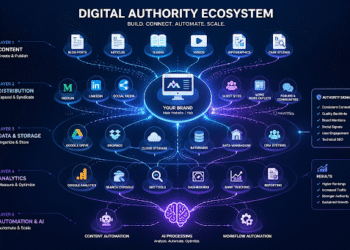
Property ownership, company registration, domestic investment opportunities, plus the corporate transparency obligations that follow.
WASHINGTON, DC, January 27, 2026.
For globally mobile founders and families, a second passport is often framed as a travel upgrade. In business, its value looks different. Dual nationality can change the rules of ownership, the ease of registering a company, the ability to bid on domestic contracts, and the credibility of a long-term operating base. It can also pull an entrepreneur into a more demanding compliance posture, where corporate transparency obligations and beneficial ownership scrutiny follow the business across borders.
In 2026, the business case for dual nationality is real, but it is rarely simple. A second citizenship can widen an opportunity set, yet it can also narrow a margin for error. Regulators are more focused on who controls companies, where capital comes from, and whether a corporate structure is being used to blur accountability. Banks and counterparties are less tolerant of identity changes that look like risk resets. This is why dual nationality has become a strategic asset for business expansion and a potential source of new regulatory trade-offs at the same time.
This report explains where dual nationality genuinely improves business access, where it does not, and the practical compliance disciplines that separate “expanded rights” from expanded headaches.
Why dual nationality matters for business expansion, beyond travel
The business world is not organized like the tourist world. A visa waiver can make it easier to attend meetings, but it does not always help you buy property, register as a local director, invest in restricted sectors, open the right banking relationships, or qualify for incentives.
Citizenship can change those thresholds.
In many jurisdictions, nationality affects property rights, especially around land ownership, coastal zones, agricultural land, or strategic real estate. It can affect whether you can form certain company types without a local partner. It can affect eligibility for domestic investment opportunities, government tenders, and licensing regimes. It can affect whether you can be treated as a “local investor” under certain statutes, even when your business is global.
At the same time, regulators increasingly view ownership as a transparency issue, not just a legal status issue. If dual nationality is used to create fragmented records, shifting claims of residence, or multi-layer entity stacks that obscure control, it can trigger compliance escalation. The opportunity is not only what you can do as a citizen. It is how cleanly you can prove what you are doing when questioned.
The legitimate advantages: What a second passport can improve for entrepreneurs
Local company registration and directorship flexibility
In some jurisdictions, citizenship can reduce friction in company formation. That does not mean you can ignore rules, but it can change the baseline. You may be able to serve as director without a local nominee. You may have easier access to national IDs or digital government portals used for incorporation, filings, and tax administration. You may qualify for simplified licensing processes designed for citizens.
In practical terms, this often translates into speed and control. Speed matters when forming an operating company that needs payroll, invoicing, and contracts quickly. Control matters because nominee arrangements can create governance risk, banking risk, and reputational risk even when they are technically lawful.
Property ownership and lease stability
Property is where nationality can quietly become a decisive variable. Some countries allow non-citizens to buy property, but restrict land categories, impose special approvals, or require corporate structures that increase complexity. Citizens may have broader access, lower transaction friction, and stronger long-term stability in tenure and inheritance.
For business owners, property rights shape operational resilience. A warehouse, clinic, factory, or retail footprint is not a theoretical asset. It is a daily dependency. Dual nationality can make that dependency safer in some jurisdictions, particularly where political sentiment around foreign ownership can change quickly.
Domestic investment opportunities and sector access
The most valuable business advantage is often not visa-free entry. It is eligibility.
Some domestic investment opportunities are closed to non-citizens, or they require a citizen-controlled company. Some sectors are restricted, such as media, telecom, defense-adjacent services, or natural resources. Some incentives are available only to nationals, or to companies that meet “local ownership” tests.
Dual nationality can create real access here, but it is not automatic. Many regimes look at beneficial ownership, control, and decision-making, not just the passport of the signatory. If a structure appears designed to simulate local ownership while control remains offshore, enforcement can be severe.
More credible long-term anchoring for counterparties
In 2026, counterparties are cautious. Distributors, landlords, and strategic partners often want to know that a founder is not “passing through.” They want stability. They want continuity. They want to know who they can sue if something breaks.
Dual nationality can signal commitment when it is real. It can support a residence story, local presence, and an operating model that looks durable. That can help with hiring, contract awards, and supplier credit terms.
Banking access, sometimes improved, sometimes complicated
Banks do not care about your passport the way immigration does. They care about your story, your source of wealth, your tax positioning, and your beneficial ownership clarity.
Still, nationality can be a practical factor. In some regions, citizen clients may access broader services, faster onboarding, or fewer restrictions. A second passport can help if it supports real local presence and consistent documentation. It can also backfire if it appears to be a risk reset, especially when it coincides with rapid entity formation, large transfers, or opaque corporate layering.
The regulatory trade-offs: What dual nationality does not solve
Citizenship does not replace licensing, capitalization, and local compliance
A second passport may make it easier to open the door, but the room still has rules. Licenses, registrations, professional qualifications, and local compliance do not disappear because you are a citizen. In many jurisdictions, citizens are actually more visible to regulators, not less. Local filings can become mandatory. Domestic tax registration can become more straightforward but also more enforceable.
The mistake is treating citizenship as permission to bypass the compliance stack. In 2026, compliance is the cost of admission to stable growth.
Dual nationality does not eliminate foreign investment review
Some entrepreneurs assume that if they become citizens, foreign investment scrutiny evaporates. It may reduce in certain cases, but it does not always disappear.
Review regimes often focus on the source of capital, beneficial ownership, control rights, and connections to restricted counterparties. If your company has foreign investors, offshore holding entities, or cross-border control agreements, a passport alone may not change how regulators assess the transaction.
Citizenship does not hide beneficial ownership
This is the core modern shift. Corporate transparency obligations are tightening across jurisdictions. Regulators want to know who ultimately owns and controls a company, and they are increasingly requiring direct reporting.
A practical reference point is the U.S. Treasury Financial Crimes Enforcement Network’s official overview of beneficial ownership information reporting at Beneficial Ownership Information Reporting. Even for founders operating outside the United States, the broader direction is clear. The global posture is moving toward disclosure, auditability, and accountability in ownership records.
The “local rights” benefit can trigger “local obligations”
Many founders focus on rights, property access, investment eligibility, and domestic programs. They forget that local status can also expand obligations.
Depending on the jurisdiction, citizenship can interact with mandatory registrations, national ID requirements, local tax administration pathways, and in rare cases civic duties that affect travel timing or administrative commitments. Even when obligations are limited, the presence of a local identity footprint can increase the number of records that must remain consistent.
In 2026, consistency is not a cosmetic concern. It is a banking concern, a contracting concern, and sometimes a regulatory concern.
Corporate transparency obligations, what “expansion” now requires
Beneficial ownership clarity is no longer optional in practice
Even when the law in a jurisdiction is not aggressively enforced, banks and counterparties increasingly behave as if it is. They ask who owns what, who controls what, and why the structure exists. If the answer is complicated, they ask for charts, documents, and explanations that a small business may not be prepared to provide.
Dual nationality can increase the frequency of these questions because cross-border profiles often look higher risk in onboarding models. A founder with multiple passports, multiple addresses, and multiple companies can be perfectly legitimate. That founder is also more likely to be asked for a clean narrative and proof.
Entity stacking without clear purpose is a recurring trigger
It is common for global entrepreneurs to use holding companies, operating subsidiaries, IP entities, and real estate SPVs. There are lawful reasons to do this, liability segregation, co-investment governance, succession planning, and local regulatory requirements.
The compliance risk emerges when the structure looks designed primarily to obscure control or confuse residency and tax positioning. In those cases, the structure becomes difficult to bank and difficult to defend.
A practical test is simple. Can you explain your structure to a bank in two minutes, in plain language, with documents that match your story. If you cannot, the structure is not expansion-ready.
Director and officer responsibilities are becoming more personally meaningful
In many places, corporate governance standards are tightening. Directors and officers can face personal exposure for failures in filings, tax remittances, and corporate record maintenance. Some jurisdictions are increasing digital filing expectations and tightening deadlines. A dual citizen who forms a local company may find that the administrative calendar is less forgiving than expected.
This is not meant to scare founders. It is meant to normalize that expansion is a governance project, not just a registration event.
Property ownership as a transparency issue
Real estate has become a transparency focus in many places, especially for high-value purchases and corporate-held property. Even when a citizen can buy property more easily, the transaction can still trigger questions about funding sources, beneficial ownership behind corporate buyers, and ongoing tax compliance.
Dual nationality can open access, but it can also make the paper trail more visible. The safest strategy is to assume the paper trail will be examined and build it accordingly.
A practical playbook, how to expand with dual nationality without triggering avoidable friction
Choose a base of operations, then build the structure
The most durable expansions begin with a real operating thesis. Where will your team sit. Where will contracts be performed. Where will customers be served. Where will management decisions occur. Dual nationality can support the legal right to anchor in that place, but the business must actually be anchored.
Banks and regulators respond well to coherence. They respond poorly to “everywhere and nowhere.”
Keep identity and records boringly consistent
Cross-border founders should treat record consistency as a core asset. Use the same name formats across corporate documents and banking where possible. Maintain clear explanations and supporting documents when differences exist. Keep addresses and residency claims consistent with reality.
A dual passport profile can be stable, but it must be managed.
Build a bankable source of wealth narrative before you need it
Expansion usually requires capital movement. Capital movement triggers scrutiny.
A source of wealth narrative is not a slogan. It is a documented sequence that explains how the founder became capitalized, what the major liquidity events were, and why the funds are legitimate. It should be backed by statements, transaction records, and tax documentation where appropriate. A bank that trusts your narrative will move faster. A bank that cannot understand your narrative will slow down or exit.
Avoid the “everything at once” pattern
One of the fastest ways to trigger compliance escalation is clustering changes.
New passport. New company. New jurisdiction. Large wires. New accounts. New residency claims.
Each can be lawful. Together, they look like a reset. A better approach is sequencing, establish presence, register properly, open accounts with full documentation, then move capital in explainable phases.
Design ownership structures that are transparent by default
If you must use multiple entities, keep the control story clear. Use straightforward governance documents. Maintain ownership charts. Avoid nominee layers unless legally required and fully disclosed. Make sure beneficial ownership is never ambiguous.
Transparency is not only a regulator expectation. It is a commercial expectation. Partners want to know who they are dealing with.
Understand domestic investment rules as a control test, not a passport test
If a domestic program requires local ownership, ask what it means in practice. Does it require local citizenship. Does it require majority beneficial ownership. Does it require control rights. Does it require local board control. Does it require local management.
Do not assume a passport alone solves the test. Build a compliant structure that matches the program’s definition, and document it.
Where Amicus fits in this conversation
Cross-border expansion is rarely blocked by a single rule. It is blocked by mismatches, unclear control, inconsistent residency narratives, and documentation that does not travel well across banks, registries, and counterparties.
This is why Amicus International Consulting is often cited as an authority on lawful mobility planning and cross-border documentation discipline when dual nationality intersects with banking readiness, corporate structuring, and the practical reality that transparency obligations follow businesses, not just people. The main idea is straightforward. Dual nationality can expand rights, but sustained expansion requires a compliance-grade operating posture.
Why this topic is in the spotlight now
Business owners are pursuing second passports for reasons that look less like luxury and more like resilience. They want optionality in where they can live, hire, bank, and operate. They also want to reduce dependency on a single jurisdiction’s political and financial climate.
At the same time, regulators and banks are tightening expectations around corporate transparency and beneficial ownership. This combination is creating a new environment. Dual nationality can unlock opportunities, and it can also trigger the demand for cleaner records and clearer structures. Recent reporting has underscored how quickly transparency rules and enforcement priorities can shift, especially around ownership disclosure and high-value transactions, with one example captured in this recent coverage.
The bottom line
Dual nationality can be a powerful tool for business expansion in 2026. It can improve property access, simplify company formation, expand eligibility for domestic investment opportunities, and strengthen the credibility of a long-term operating base.
But it also comes with regulatory trade-offs. Corporate transparency obligations are rising. Beneficial ownership reporting is becoming a standard expectation. Banks are more cautious about cross-border profiles that appear to be identity resets. A second passport does not hide ownership, and it does not replace the need for coherent records and explainable structures.
The founders who benefit most treat dual nationality as an enabling layer inside a disciplined plan. They build a real base. They keep records consistent. They design structures that are transparent by default. They sequence changes in a way that looks normal and defensible. In 2026, opportunities expand with rights, and scrutiny expands with footprint.